
If you are shopping for outdoor furniture, you will likely come across two of the most common materials: aluminum and wrought iron. At first glance, the choice often comes down to style. Some people prefer the lighter, more modern look of aluminum, while others are drawn to the weight and tradition of wrought iron. But the real difference goes beyond appearance.
Understanding how each material performs will help you choose the right fit for your space, your climate, and how you plan to use your furniture.
The basics
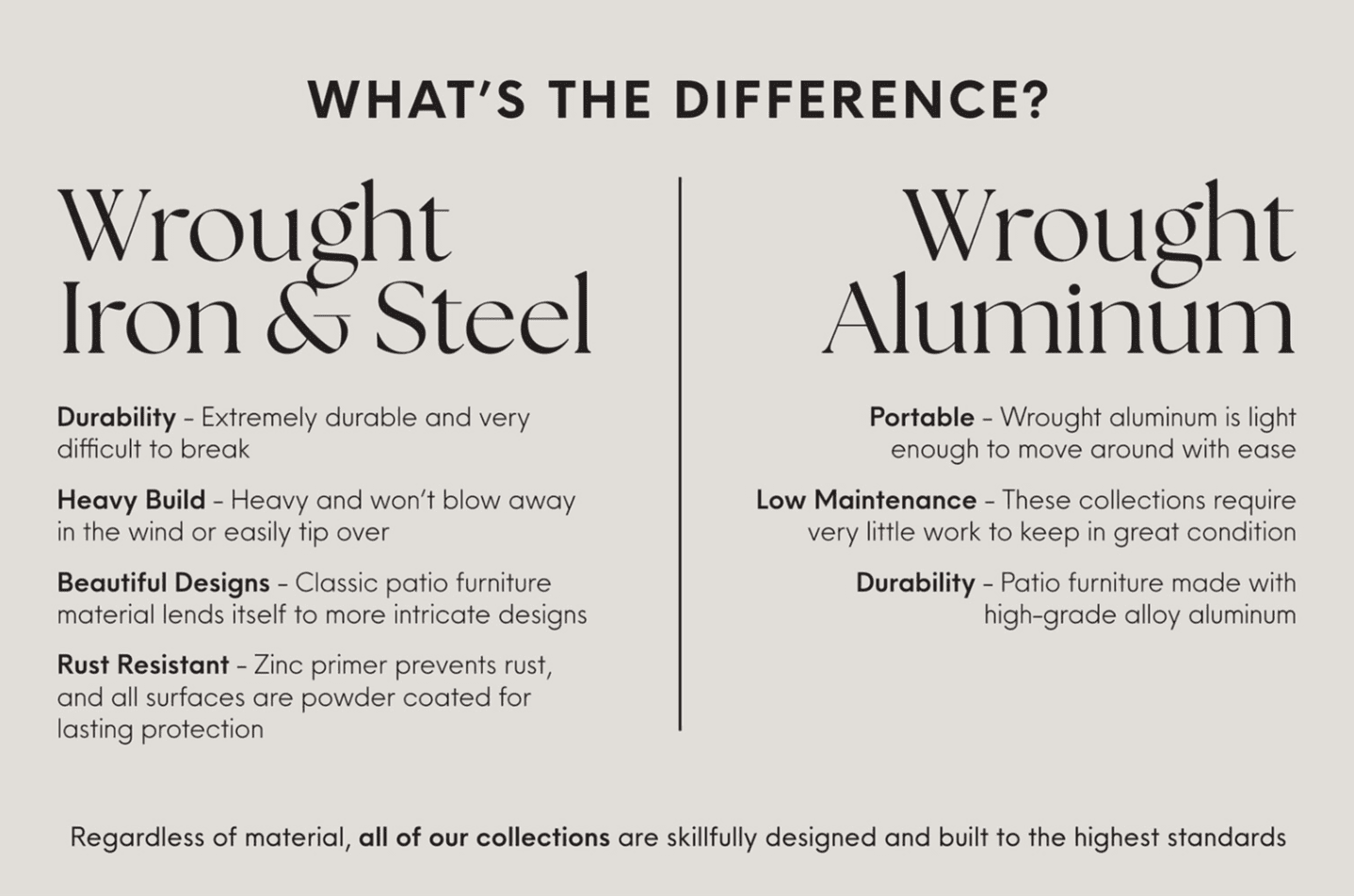
Aluminum and wrought iron are both durable materials used in high quality outdoor furniture, but they behave very differently. Aluminum is lightweight and naturally resistant to rust. It is easy to move and works well in a wide range of environments. Wrought iron is significantly heavier and known for its strength and stability. It has a more substantial feel and is often associated with classic designs. O.W. Lee specializes in both, which allows homeowners to choose based on function and preference rather than being limited to one option.
Weight and mobility
One of the biggest differences between the two materials is weight. Aluminum is easy to lift and reposition. This makes it a good choice if you like to rearrange your space or move furniture seasonally. Wrought iron, on the other hand, is heavier and takes a little more effort to move around. This added weight can be an advantage in areas with wind, where lighter furniture may shift or tip more easily.
Durability and longevity
Both materials can last for many years when they are well made, but the way they age is different. Aluminum does not rust, which makes it a reliable option in humid or coastal environments. Wrought iron is extremely strong, but it does require a high quality finish to prevent rust over time. This is where construction and finishing processes matter. Companies like O.W. Lee use advanced finishing techniques to protect iron furniture and help it maintain its appearance over the long term.
Maintenance
Aluminum is generally lower maintenance. It can be cleaned easily and does not require much ongoing attention. Wrought iron may require occasional touch ups if the finish is ever compromised, especially in harsher climates. That said, with proper care, both materials can perform well for years.
Comfort and feel
Comfort is influenced by more than just cushions. The structure of the frame also plays a role. Aluminum furniture often has a more relaxed feel and is commonly paired with thicker cushions. Wrought iron has a more solid, grounded feel. Many people associate it with a sense of permanence and durability. It also allows for options like O.W. Lee’s spring base rocker (available in all of their wrought iron collections), which offers a premium rocking experience. Well designed pieces from brands like O.W. Lee focus on ergonomics and cushion support in both materials, so comfort does not have to be a tradeoff.
Style and design
Aluminum tends to work well in contemporary or transitional spaces. It can be shaped into clean lines or more detailed forms depending on the design. Wrought iron is often associated with traditional or classic styling, though it can also be adapted into more updated looks. Both materials offer a wide range of design possibilities, especially when paired with different finishes and fabrics.
Which is better for your climate
Your environment should play a role in your decision. In humid or coastal areas, aluminum has an advantage because it does not rust. In dry or windy regions, wrought iron can be a strong choice due to its weight and stability. In places with intense sun, both materials perform well when paired with high quality finishes and fabrics. Manufacturers with experience across different climates, such as O.W. Lee, design their products to perform reliably in a wide range of conditions.
Cost and value
There is not a simple answer when it comes to cost. Both aluminum and wrought iron are available at different price points depending on quality. Lower priced options in either material often cut corners in construction or finishing, which can lead to issues over time. Higher quality furniture is built to last and typically offers better long term value. Choosing a well made piece, regardless of material, is often more important than the material itself.
So which should you choose
The right choice comes down to how you plan to use your space. Aluminum may be a better fit if you want something lightweight, easy to move, and low maintenance. Wrought iron may be the better option if you prefer something heavier, more substantial, and resistant to wind. Both materials can perform beautifully when they are designed and built with care.
Final thoughts
There is no single “better” material. There is only what works best for your space and your lifestyle. By understanding the differences between aluminum and wrought iron, you can make a more informed decision and invest in furniture that will serve you well over time.
Ready to see the difference
Visit a dealer near you to experience both materials in person and find the right fit for your outdoor space.