
Sustainability
Sustaining our natural resources. Making a world of real difference.
Since 1947 O.W. Lee has gained an award winning reputation not only for beautiful handcrafted casual furniture but also for the durable quality of its products. This provides a significant contribution to sustainability and the protection of our environment.
O.W. Lee has always been respectful of the natural resources used in handcrafting outdoor furniture. The quality of the product, in and of itself, makes it highly sustainable as it can be refinished and used for generations
Steel – Steel frames are made from 87.3% recycled steel. All scrap steel is recycled.
Aluminum – All aluminum scrap and frames are recycled.
Cartons – All cartons are cut to computerized specifications using an EM5-50 Right-Sized Packaging On Demand machine that reduces waste and excessive or obsolete inventories of cartons. All cardboard waste is compressed and bundled using a Harmony M-60 machine and brought to the local paper recycling company.
Foam/Dacron – Foam cores are cut to precise specifications with a Mach 1 Model M45 Automatic CNC Contour Cutting Machine, which allows precise cuts, reducing waste and obsolete inventories of pre-cut foam. Recycled Dacron is used in stuffing cushions, when available. Foam and Dacron scrap is donated to local sew shops.
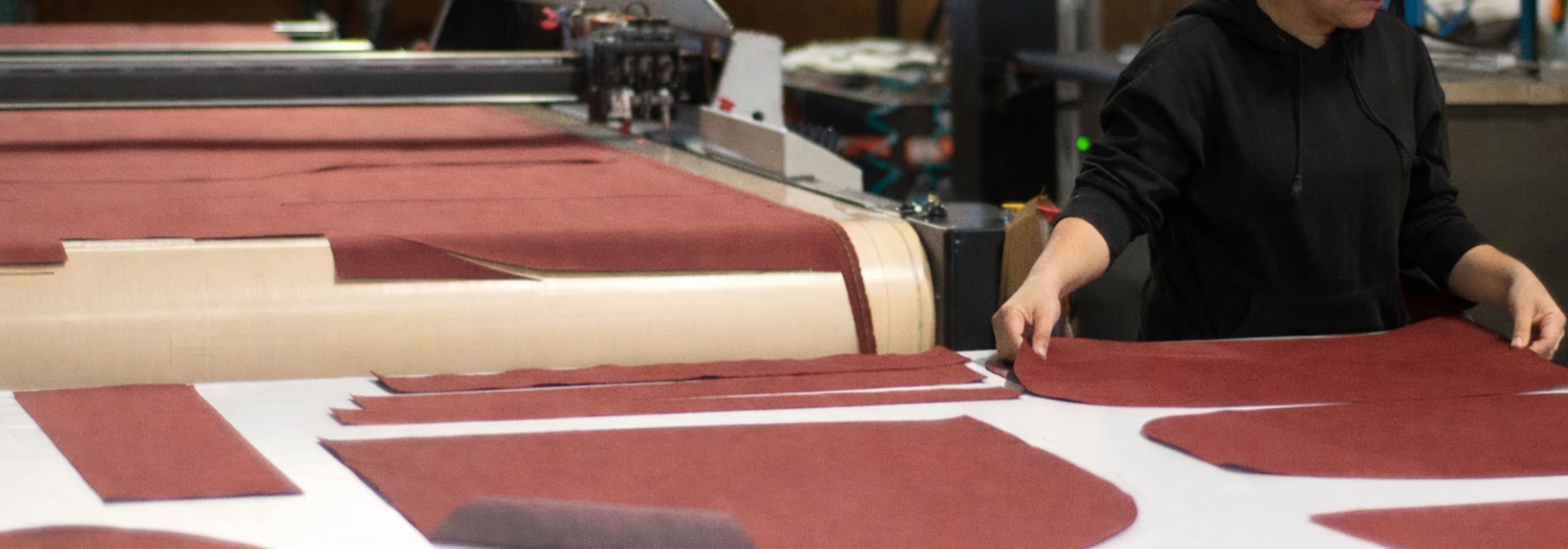
Fabric – O.W Lee has invested in a state of the art fabric cutting machine that increases fabric yields and thereby reduces scrap material by more than 20%. All Sunbrella® Fabrics (60% of stocking fabrics) has a GREENGUARD Certification and the GREENGUARD Children & Schools Certification as a low chemical emitting product. Sunbrella also offers a recycling program directly to consumers.
Click here for more information on Sunbrella environmental policies.
Click here for more information on Ultrafabrics environmental policies.
Finishing/Powder Coating – Zero VOC Emissions at time of manufacturing and for the life of the product. Non-adherent primer coatings are reclaimed and re-used.
The “well to wheel” analysis applied by sustainable critics states that the cost of transportation of the product and materials used to manufacture the produce directly impacts the environment – for example, fuel consumption (fuel is non-renewable). OW Lee is a domestically produced product which makes it a desirable choice for domestic installations. Imported products from China and Asia are not as desirable insofar as the cost of transporting the product to the US.
O.W. Lee meets all Federal, State and Local environmental safety standards.